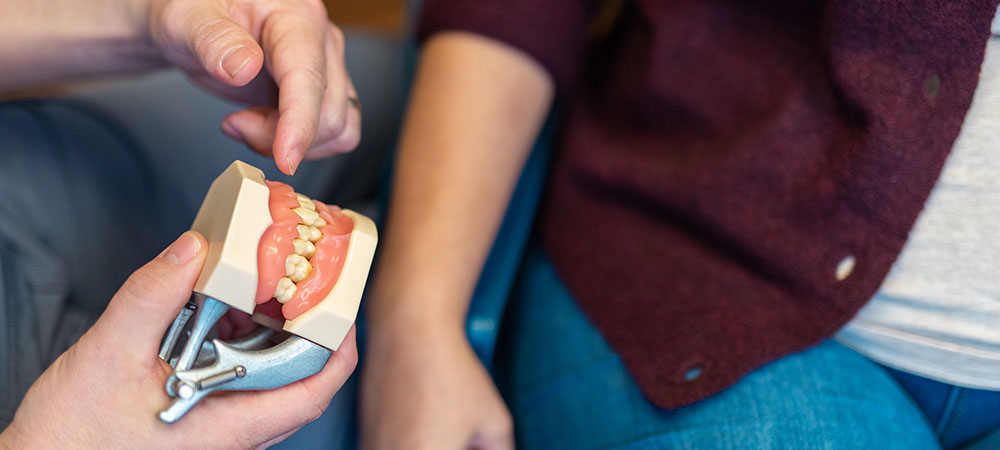
With gum disease treatment, our periodontists can help stop the deterioration of your bone and gums, repair the damage you’ve experienced as a result of infection, and protect your teeth and bone from future problems. As a skilled periodontists, our doctors are proficient in the stages of gum disease and have spent many years helping patients improve oral health and overall quality of life.
Common Signs of Gum Disease
Gum disease or periodontal disease is an infection of your gums and the tissue surrounding your teeth. When left untreated, infections in the gums can result in:
- Destroyed gum tissues
- Damaged tooth-supporting bone
- Discomfort and pain
- Tooth loss
One common symptom of periodontal disease is that your gums may recess, exposing the roots of your teeth. In this case, your doctor may recommend gum recession treatment, which uses gum grafts to re-cover the root surfaces.
Periodontal disease is associated with systemic conditions such as diabetes, cardiovascular disease, osteoporosis, respiratory disease, and cancer.
Why Treat Gum Disease?
Gum disease treatment involves a variety of techniques for treating periodontal disease. These techniques focus on eliminating the infection, repairing areas with gum and bone loss, and protecting you against future damage.
Gum disease treatment plans in Charlotte, NC offer a variety of important benefits:
 Feel More Comfortable
If you have swollen and tender gums, bad breath, loose teeth, or other symptoms of infection, periodontal care can significantly improve the quality of your life.
 Prevent Gum Disease and Tooth Loss
Gum disease treatment and gum recession treatment can protect tooth-supporting bone from further damage.
 Smile More Confidently
Infection can cause receding gums, bleeding, and gum detachment. Treatment can fix these issues and help you smile more openly and often.
Targeted Treatment for Gum Disease

You should consider treatment if your general dentist has diagnosed you with gum disease, or if you have any of the following symptoms of infection:
- Swelling
- Tenderness
- Bleeding
- Inflamed Gums
- Loose Teeth
- Bad Breath
- Bad Taste
You may need gum recession treatment, specifically, if your gum line is irregular or if one of your teeth appears longer than normal.
Consultation
Start with a consultation and examination at our Charlotte-based practice, where one of our periodontists will talk with you about your concerns, perform a comprehensive examination, and take X-rays or CT scans. If you’ve never had a scan taken before, know that it’s a completely comfortable and non-invasive process — about the same experience as taking any normal photograph.
Your doctor will then discuss your treatment options and his recommended approach. They will answer any questions you have, review what to expect, and help you schedule your procedure, which usually takes place in a separate appointment.
Gum Disease Treatment Options
Your experience will depend on your procedure, but the least invasive approach we use requires no downtime, and patients with more intensive procedures may only need 2-3 days of recovery. Common procedures include:
Gum Recession Treatment
Your periodontist will use gum grafts to re-cover the root surfaces, protect your teeth, and improve the aesthetics of your smile. Our doctors’ minimally invasive approach offers a faster, more comfortable recovery. Most patients take Ibuprofen and TYLENOL® for 2-3 days to manage swelling and sensitivity after surgery. You should also stick to soft foods for a few days and avoid brushing the surgical site for up to two weeks.
Traditional Surgery
If you need more advanced gum disease treatment, your periodontist can perform a procedure to further reach and clean areas beneath the gums. They may also graft bone to help regenerate areas of bone loss and strengthen sites with significant damage. Most of our Charlotte patients stick to a soft food diet for a few days after surgery and take Ibuprofen and Tylenol for 2-3 days to manage discomfort.
Scaling and Root Planing
This non-surgical treatment removes disease-causing bacteria and toxins below the gum line and on the root surface. Most patients describe this deep cleaning as an experience similar to a dental cleaning, and there’s little to no downtime and discomfort afterward.
Laser Surgery
Laser surgery is a minimally invasive therapy that doesn’t involve cutting or stiches. It can be an ideal approach depending on the location and severity of your gum disease, and it offers a faster recovery than traditional surgery.
Real Patients, Real Results
Local Anesthesia and Sedation Dentistry Available
With any gum disease treatment, our periodontists will numb the area to promote your comfort. In addition, they provide IV sedation to reduce or eliminate your anxiety or fear during the procedure. Your safety and comfort are our highest priorities.

How Much Does Gum Disease Treatment Cost in Charlotte, NC?
Pricing for gum disease treatment depends on the procedure you have and the extent of your needs. In general, scaling and root planing is $280-380 per quadrant of your mouth, while surgical or laser therapy is $1,100 to $1,800 per quadrant. Gum recession treatment can range from $1,000 for one tooth to $5,000 for a more complex procedure.
The cost of treatment should never be a surprise. Contact us for a consultation, and we’ll take the time to discuss your treatment options, cost and payment options, and, most importantly, devise a plan to protect your smile for years to come.
Explore gum disease treatment with Metrolina Periodontics & Implant Dentistry. Schedule an appointment online or by calling us in Charlotte, NC, at (704) 544-2224.
Gum Disease Treatment FAQs
-
Can Gum Disease Be Reversed?
You can improve gum health in the early stages of gum disease with professional care and better home habits. Once gum disease progresses and causes bone or gum loss, gum disease treatment focuses on controlling infection and preventing further damage. Your periodontist will explain where you fall on the disease spectrum and outline the treatments that can protect your smile moving forward.
-
How Quickly Does Gum Disease Progress?
Gum disease progresses at different rates for different people. Some patients see slow changes that develop over years, while others experience faster shifts because of genetics, smoking, medical conditions, or poor home care. Regular dental visits help catch these changes early so your periodontist can intervene before more serious damage occurs.
-
Will Treating Gum Disease Help My Overall Health?
Improving gum health can support better overall health because chronic inflammation in the mouth affects the rest of the body. Periodontal disease is linked with heart disease, diabetes, and respiratory conditions. Treating gum infections reduces bacterial load and inflammation, which may have positive effects beyond your mouth.
-
Do I Need Gum Disease Treatment if My Gums Do Not Hurt?
Yes. Gum disease often develops without pain. Many patients do not notice symptoms until the condition has already progressed. If your dentist sees signs of infection, early treatment can protect your teeth and reduce the need for more involved procedures later.
-
Can Gum Disease Come Back After Treatment?
Yes. Gum disease is a chronic condition that requires ongoing maintenance. After your treatment, you will need regular periodontal cleanings to keep the gums healthy. Your periodontist will create a schedule that helps prevent infection from returning and supports long-lasting stability.
-
How Do I Keep My Gums Healthy After Treatment?
You can protect your gums by brushing twice a day with a soft brush, cleaning between your teeth daily, and following the schedule of professional cleanings your periodontist recommends. Lifestyle factors like smoking and uncontrolled diabetes can also affect gum health, and your doctor will guide you on steps that support better healing and stability.
-
Is Gum Disease Genetic?
Genetics can influence how your gums respond to bacteria and inflammation. Even with good home care, some patients develop gum disease because their immune system reacts strongly to plaque. Your periodontist will review your family history and help you understand which risks apply to you.
-
Will I Lose Teeth if I Do Not Treat Gum Disease?
Untreated gum disease can damage the bone and gum tissue that support your teeth. As these structures weaken, teeth can loosen and eventually fall out. With proper treatment, you can stop the infection and protect the teeth you already have.
-
Can Stress Make Gum Disease Worse?
Stress affects your immune system and can weaken your body’s ability to fight infection. Some patients notice more inflammation and bleeding during stressful periods. Your periodontist can help you monitor these changes and guide you on ways to reduce flare-ups.
-
Is It Normal for My Gums to Bleed When I Brush?
Bleeding is not normal. It is often an early sign of gum inflammation or infection. If you notice consistent bleeding when brushing or flossing, your periodontist can evaluate the cause and recommend steps to improve your gum health.