
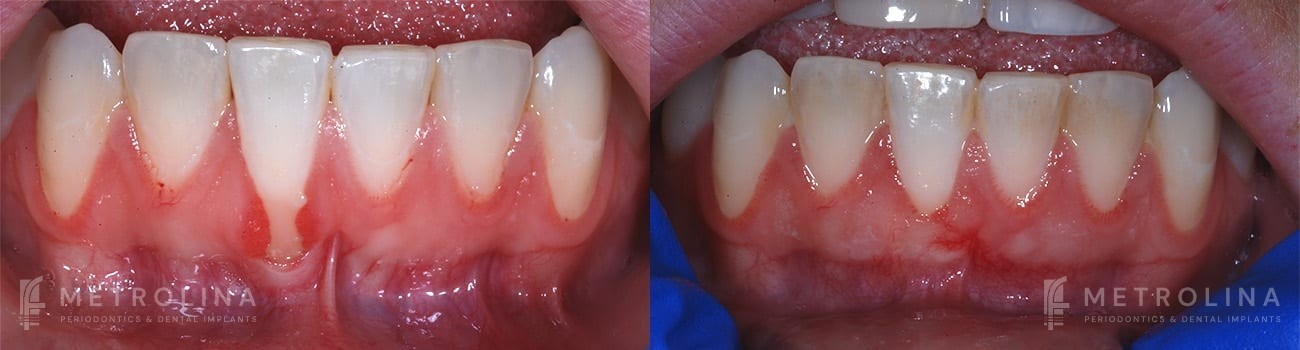
Our periodontists perform gum grafting procedures for Huntersville patients to regenerate lost gum tissue, cover exposed tooth roots, help enhance your smile, and maintain the health of your mouth preventing bone and tooth loss. The approach he uses is significantly less invasive than older gum grafting techniques, which means you should have a faster and more comfortable recovery and a more aesthetic result.
Our periodontists are proficient in gum grafting and will prioritize your comfort and safety at every stage in the process, by taking the time to explain the treatment, discuss your options, and ensure your confidence in our care.
What Are the Benefits of Gum Grafting?
Your gum tissue protects the supporting structure of your teeth. As the result of several factors — such as gum disease, improper brushing technique, and genetics — you may notice this tissue recede, exposing the roots of your teeth. Gum recession can also give your teeth an unnaturally long appearance.
The benefits of a gum grafting procedure are that it can:

Improve your comfort
When the root of your tooth is exposed, you’re more likely to experience tenderness and sensitivity when eating or drinking. Gum grafting can help Huntersville patients resolve these problems.

Protect against bone and tooth loss
Cavities and infection can develop on the surface of an exposed tooth root. This can destroy the tooth-supporting structures, eventually causing you to lose the tooth. Gum grafting prevents further damage by re-covering the root.

Give you a more aesthetic smile
When the thin and sensitive gum tissue recedes, it can make your tooth appear unnaturally long. Dr. Ficca uses gum grafting to cover exposed areas and recreate the natural gum line, enhancing your smile.

Support orthodontics
Your gum tissue may be too thin to protect your teeth during orthodontic tooth movement. Gum grafting builds up stronger gum in certain areas of your mouth before adjusting the position of your teeth. Dr. Ficca can coordinate with your orthodontist to achieve this goal.

Am I a Candidate for Gum Grafting?
You may be a candidate for gum grafting if your gums have receded (revealing the roots of your teeth), if you are experiencing sensitivity or pain in these areas, or if you want to enhance your smile. Your general dentist or orthodontist may also refer you to our practice for treatment.
Several factors can lead to gum recession, including gum disease, overly aggressive tooth brushing, and genetics. During your initial visit with one of our periodontists, they’ll talk with you about your symptoms, if any, and concerns and discuss these factors. He’ll also perform a comprehensive examination to evaluate your needs.
If you require a gum grafting procedure, your periodontist will explain what you can expect with treatment. They can use either your own tissue or donor material to re-cover the area of recession. Having extensive experience in gum grafting, your doctor will talk to you about the advantages of each option specific to your treatment needs. If you opt to use your own tissue, it can come from one of several areas of your mouth, using a minimally invasive approach to minimize discomfort and speed healing.
Some Huntersville patients will need treatment for gum disease as well as gum grafting to address the cause of their gum recession. In other cases, patients can simply modify the behaviors that contribute to recession, such as using a soft-bristle tooth brush instead of a more abrasive brush. Your periodontist will discuss ways to reduce recession with you when developing your treatment plan.
What Is It Like Recovering from Gum Grafting?
You’ll have your gum grafting procedure in with either local anesthesia or local with IV sedation. Both approaches will keep you comfortable throughout the process. The second option helps eliminate anxiety and fear through the entire procedure. Your doctor can treat anywhere from a single tooth to the entire mouth at one time.
Using a minimally invasive technique, your periodontist will place the graft beneath the outer layer of the gums and reshape the gum line. This will keep the surgical site small, help you heal more quickly, and give you a more natural-looking and attractive outcome.
The recovery from gum grafting is about 2-3 days. We recommend taking Ibuprofen and TYLENOL® over that time to reduce discomfort. Some slight swelling is also common. You’ll stick to soft foods for a few days and avoid brushing the site for up to two weeks. Our doctors use dissolvable sutures, which don’t require in-office removal. We’ll see you back at the practice after two weeks for a check-up and to answer any questions you have.
What Is the Cost of Gum Grafting Near Huntersville?
The price of gum grafting depends on the number of areas that require treatment and the complexity of your procedure. Costs range from $1,000 for one tooth to $5,000 for a more extensive surgery. In general, the sooner that you can treat gum recession, the simpler the procedure is and the easier your recovery.
Whether your general dentist has referred you to our practice, you’re experiencing symptoms of gum recession, or you are unhappy with the way your gums look, we encourage you to make an appointment. During your visit, we’ll take the time to go through your treatment options and discuss costs and options. Your periodontist and their team will help develop a plan to give you back a healthy and aesthetic smile.
Schedule a consultation with us to learn more about gum grafting. Contact us online or call our office near Huntersville at (704) 544-2224.
Gum Grafting FAQs
-
Will Gum Grafting Change the Way My Smile Looks?
Yes. Gum grafting often improves smile balance by restoring the natural shape of your gum line. Many patients feel their gums look fuller and healthier after the graft heals. Your periodontist will design your graft to fit your facial features and support a refined and natural result.
-
Can Gum Grafting Stop My Recession From Getting Worse?
Gum grafting helps protect the roots of your teeth and can prevent further loss of gum tissue in the treated areas. Your periodontist will also help you understand the factors that contributed to your recession so you can lower the chance of it returning in the future. This combined approach supports healthier gums over time.
-
What Type of Graft Material Is Best for Me?
You can receive your own tissue or donor tissue. Both options work well when used correctly. Your periodontist will review your gum health, the amount of tissue needed, and your personal goals to decide which graft material offers the best fit. Many patients choose donor tissue because it avoids a second surgical site.
-
Do I Need Gum Grafting on Both Sides of My Mouth?
Not always. Some patients have recession in one area, while others have several sites that benefit from a graft. Your periodontist will examine each tooth and explain which locations need attention to protect your roots and support a healthy gum line.
-
How Soon Can I Brush the Treated Area After Gum Grafting?
You will avoid brushing the graft site until your periodontist confirms the area is ready for gentle cleaning. Most patients resume brushing near the two-week mark. During early healing, you will receive clear instructions that help protect the graft and keep the area clean.
-
Can Gum Grafting Help With Tooth Sensitivity?
Yes. Sensitivity often improves once the root surface is covered. The graft protects the root and shields the area from cold foods, hot drinks, and brushing. Many patients notice reduced sensitivity as soon as the tissue begins to heal.
-
How Long Does a Gum Graft Take to Fully Heal?
Initial healing usually takes a few days. The graft continues to mature over several weeks. You will have follow-up visits so your periodontist can monitor healing and confirm the tissue is becoming firm and stable. Most patients return to normal brushing and eating habits once the area is fully healed.
-
Will I Need More Than One Gum Grafting Procedure?
Some patients complete treatment in one visit, while others benefit from staged care when several areas need attention. Your periodontist will create a plan that protects your teeth, supports healthy gums, and aligns with your comfort and schedule. Each graft is customized to match your needs.
-
What Happens if I Decide Not to Treat Gum Recession?
Untreated recession can expose the root to wear and may increase sensitivity. The root surface can also develop cavities, which are harder to treat than decay on the top of the tooth. In some cases, recession may progress and weaken the support around the tooth. Gum grafting helps protect the root and preserve the health of your smile.